
/filters:quality(90)/fit-in/970x750/coros-web-faq/upload/images/83cd0699599ad899bd39de83ef23b654.jpg)
Let's face it, winter training is hard. The days are cold and dark, and snow or ice can make even the best training plans harder to stick to. It’s the most challenging season to stay consistent, but those who do will come out stronger in the spring.
To help make this season easier, we looked at the data. By analyzing winter training habits from over 10,000 COROS athletes in North America, we set out to understand what actually works to maintain or build fitness during December, January, and February. We looked at:
- Total training days from December through February
- Indoor vs. outdoor run frequency
- Changes in Base Fitness during winter
- How those changes impacted fitness in the spring
Why Base Fitness? Base Fitness is a core COROS metric that reflects how much training load your body is currently adapted to. It rises with consistent training and declines when training drops off. More than just tracking mileage or pace, Base Fitness gives a broader view of your overall training readiness.
We grouped users into three categories based on their change in Base Fitness over the winter:
- Decreased Fitness (>10% decline)
- Maintained Fitness (within ±10%)
- Improved Fitness (>10% increase)
The groups were roughly the same size, with 34% showing improved fitness, 36% maintaining their fitness, and 30% seeing a decrease in fitness. After taking a deep look at each group, the result is a clear picture of what works (and what doesn’t) when it comes to staying fit through the toughest months of the year. Here’s what separated those who gained fitness from those who lost it:
1. Consistency Matters Most
Athletes who improved their fitness over the winter trained 50% more often than those who saw a decline. That difference adds up. Missing one or two sessions a week might not seem like much in the moment, but over three months, it’s the difference between maintaining momentum and starting the spring season in a hole.
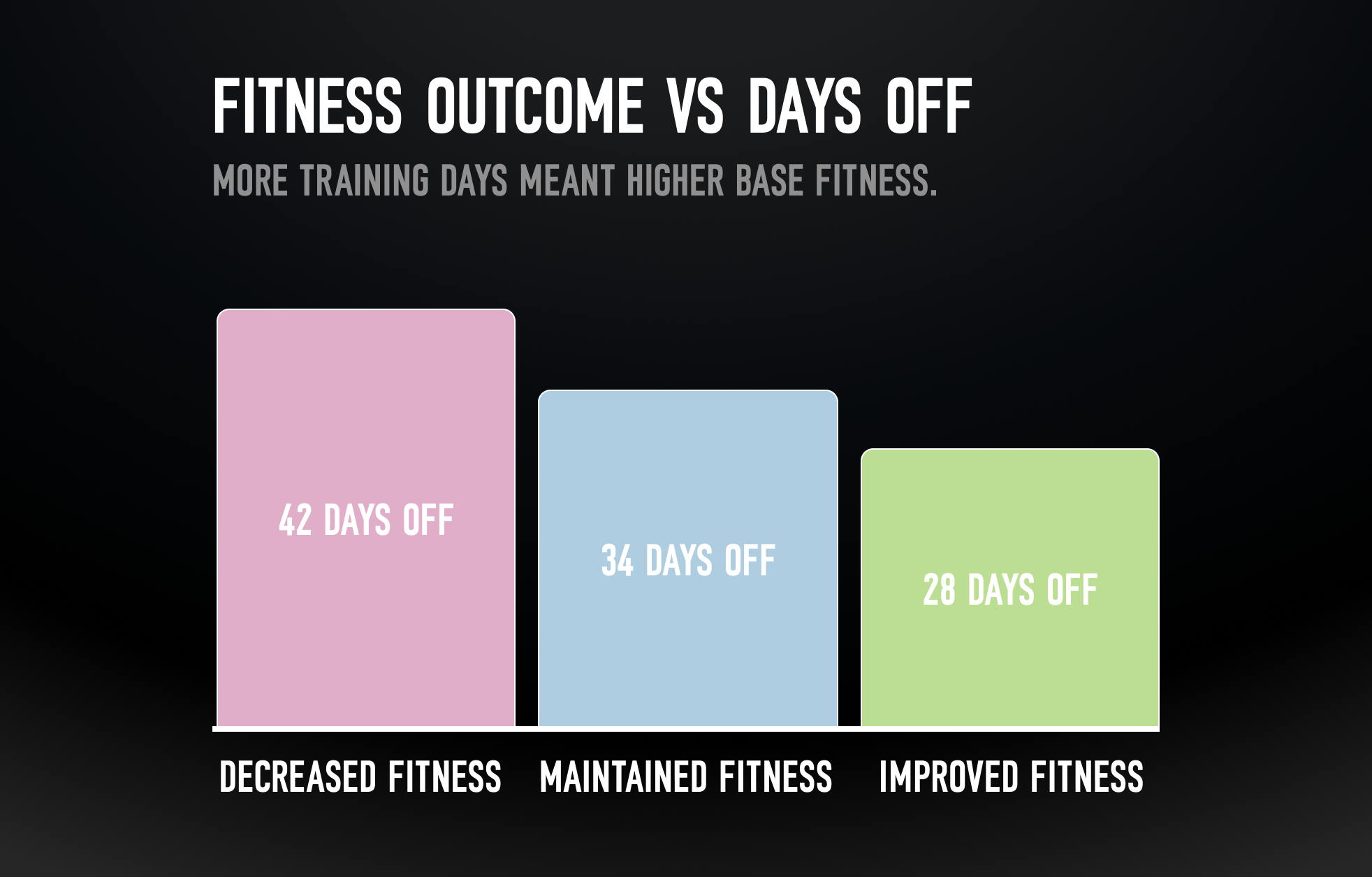
More training days meant higher Base Fitness. The pattern is clear: the fewer days off, the better the outcome. You don’t need to run every day (in fact, recovery days are an important part of training). But showing up consistently, even for short sessions, keeps your training load steady and your fitness trending upward.
2. Treadmills are Underused, but Effective
Treadmill running remains one of the most underutilized tools for winter fitness. Even among athletes who improved their Base Fitness, nearly half never used a treadmill during the winter.
That trend held across all groups:
- Decreased Group: 55% never ran indoors
- Maintained Group: 53% never ran indoors
- Improved Group: 47% never ran indoors
But here’s the catch: athletes who logged at least 13 treadmill runs over the winter (an average of once per week) were more than twice as likely to maintain or grow their Base Fitness than those who didn’t use a treadmill at all.
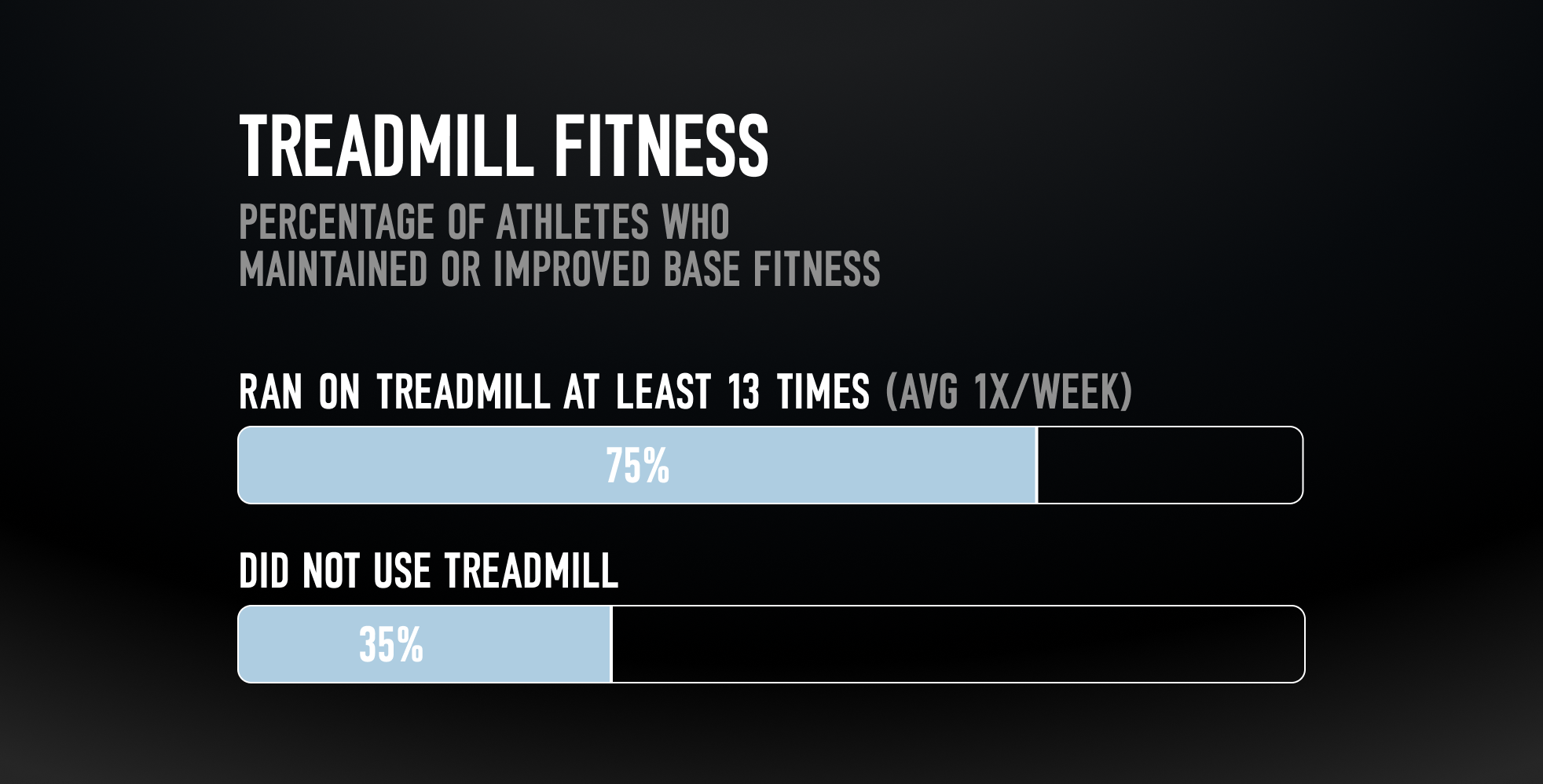
The benefit wasn’t from the treadmill itself. In fact, data shows that additional treadmill runs beyond 13 didn't come with additional benefits. The difference that treadmills make comes from not skipping runs when the weather turns bad. Those indoor sessions helped preserve consistency and training load across the season.
We suggest using the treadmill as a fallback for when outdoor training is dangerous or not an option. The takeaway shouldn't be to dedicate all your Mondays to indoor training. Instead, try to run inside on 13 of those bad-weather days that come along during the season. Sometimes they will be multiple days in a row, and sometimes the weather will cooperate for a few weeks at a time.
Treadmills may have a reputation for being boring, but they clearly work. If you struggle to get through indoor sessions, try these Tips and Tricks to Beat the "Dreadmill" Blues.
3. Spring Success Starts in December
The final key takeaway from our data is how you train in winter shapes the rest of your year. Athletes who lost fitness during the winter had a hard time bouncing back, while those who maintained or improved carried that momentum into the spring.
Here’s how each group fared by June 1:
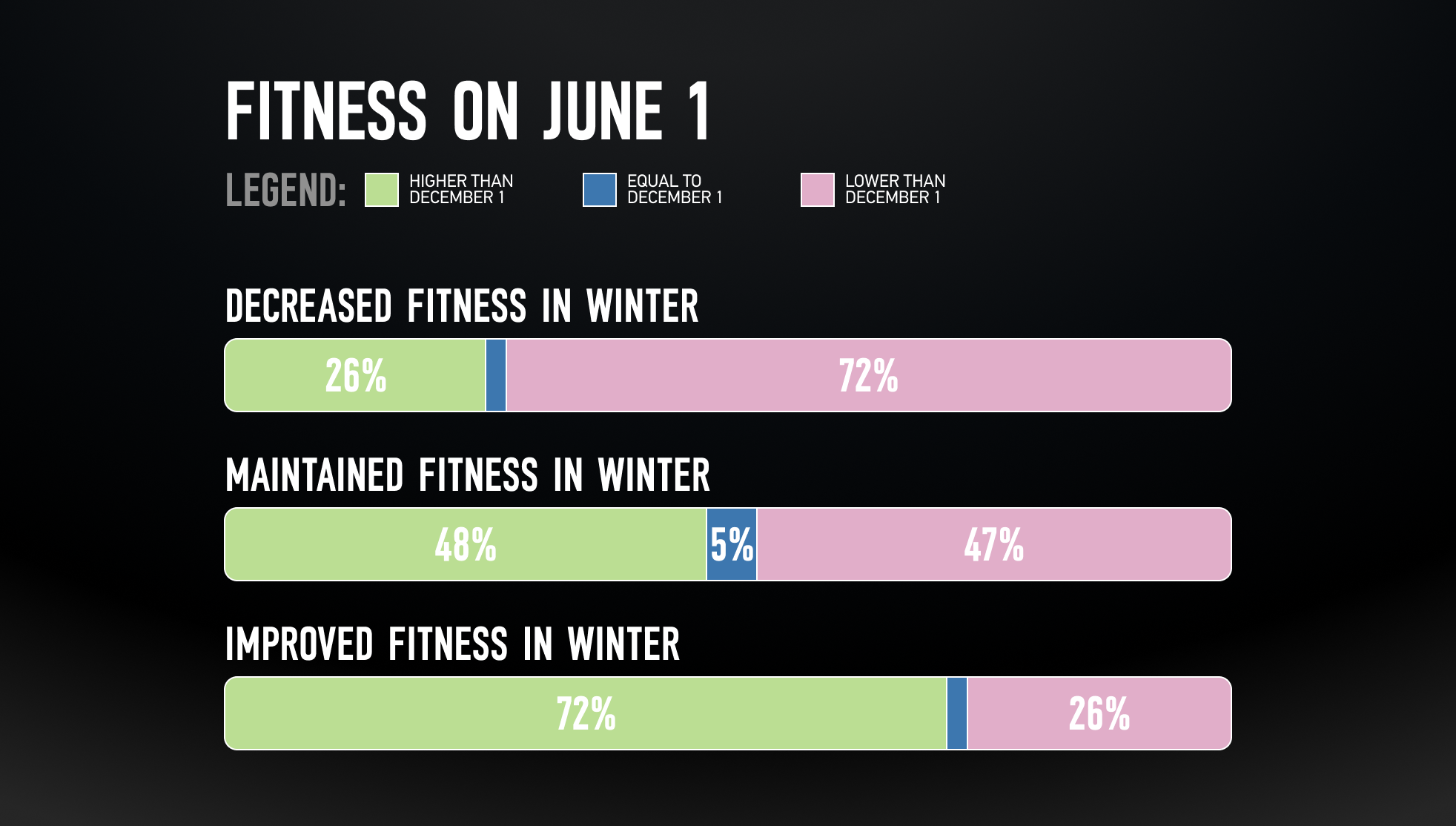
Among those who improved over winter, 33% continued to improve during spring. Meanwhile, 43% of athletes who maintained fitness in winter saw gains in spring.
That may reflect how hard it is to sustain growth over six straight months. It also shows how effective a steady winter base can be as a launching point.
Final Takeaway
Winter doesn't need to be a high-volume season, but it should be a consistent one. Whether your goal is to maintain or build, showing up matters. Subbing in a treadmill session instead of skipping, being adaptable to the weather, and keeping an eye on Base Fitness can make the difference between a spring spent rebuilding and one spent progressing.
Train smart this winter, and your future self will thank you when the season changes.